ma.

Mahmoud Ali Ibrahim · Cairo, Egypt

I lead engineering teams and stay hands-on with the code.

I’m Mahmoud, a Technical Team Lead with nine years across backend and mobile development. I help teams fix production problems, modernize existing systems, and release changes more reliably.

My core technologies are Rails, PostgreSQL, and React Native.

Looking for a Software Architect, Staff Backend/Platform, or hands-on Technical Lead? View my CV.

9+years

Software engineering
since 2017

6+years

WEPN Mobile Lead
since July 2020

<1hour

Customer-visible downtime
during a production cutover

01 / SELECTED PRODUCTS

Software I help build and maintain.

Two examples from my work across web and mobile.

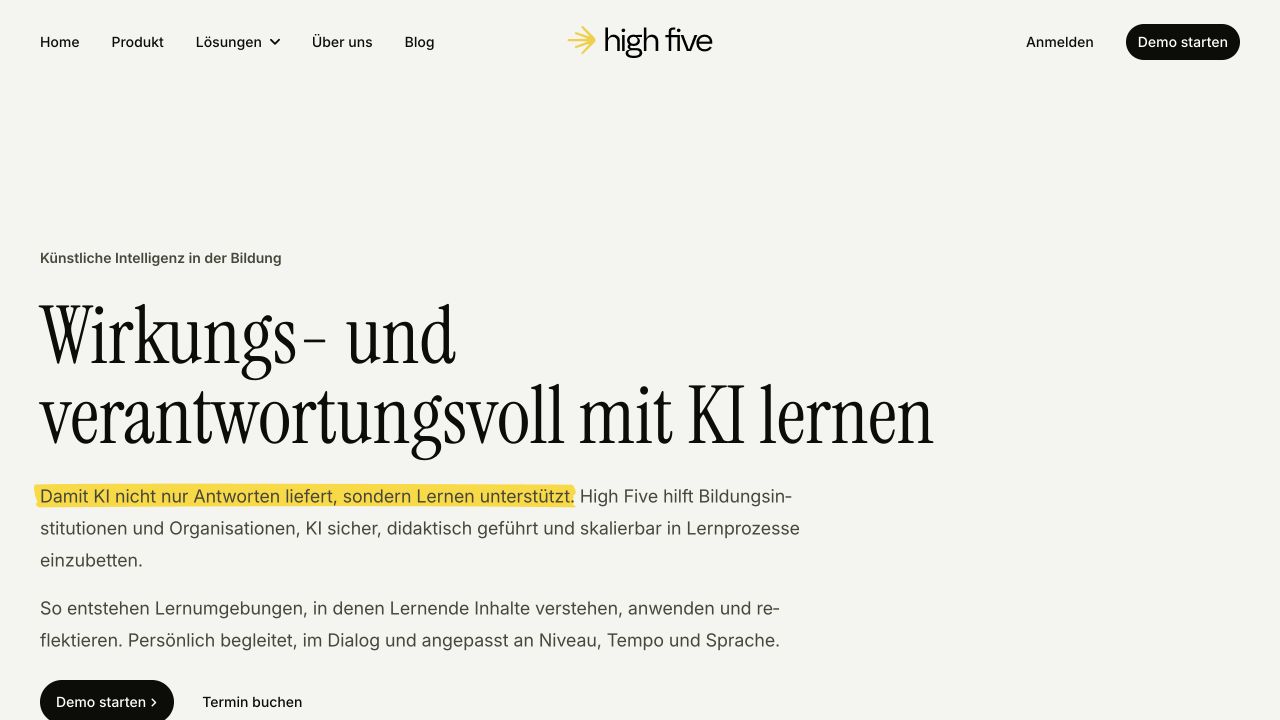
High-Five’s public website introducing its AI-assisted learning platform.
Public product website · High-Five

SAAS / AI LEARNING

High-Five — AI-assisted learning

A platform where educators combine course material with AI-guided conversations for learners.

My role
Hands-on Technical Team Lead on the High-Five team.
What I contributed
Improved how the application prepares AI instructions and loads chats, fixed production reliability problems, and strengthened testing and release checks.
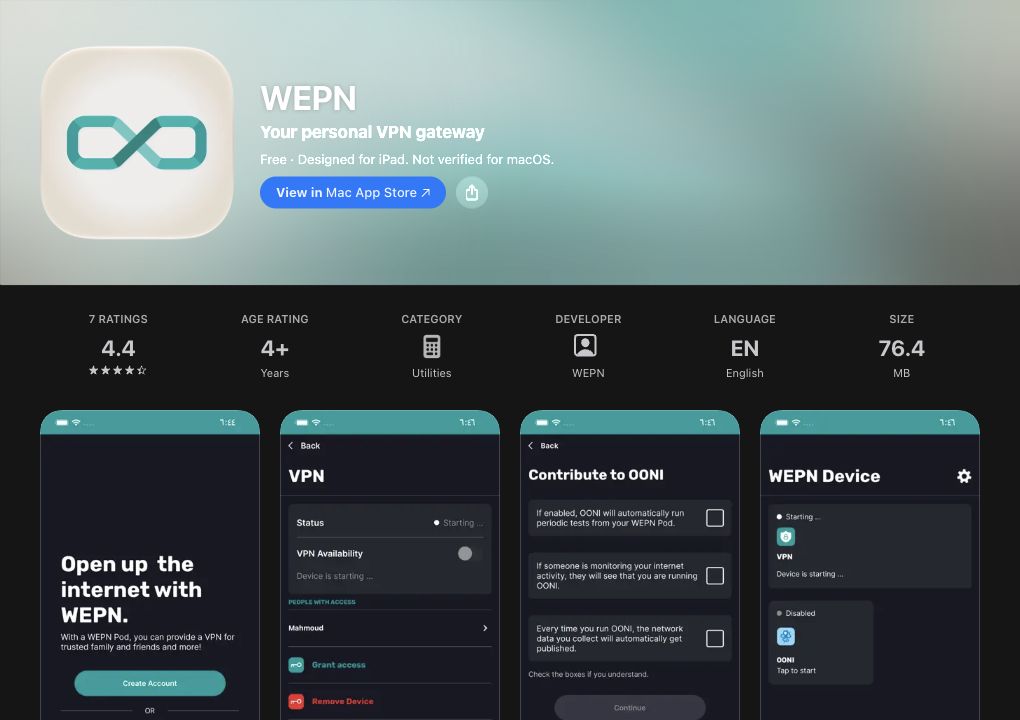
WEPN’s public App Store listing with screenshots of its mobile companion app.
Public App Store listing · WEPN

MOBILE / NETWORKING

WEPN — manage a personal VPN gateway

An iOS and Android app for managing a personal VPN gateway and sharing access with family and friends.

My role
Mobile Lead since 2020, responsible for mobile architecture and releases.
What I contributed
Built mobile features and native integrations, automated releases, and created a connectivity test that helps users check whether their home network supports the gateway.

My ownership covers the mobile app; backend and Pod software are outside that scope.

Product images show public websites and listings. My contributions are described separately from the wider team’s work.

02 / CASE STUDIES

Problems I’ve worked through.

A closer look at the problem, my contribution, and what changed.

Showing all 8 case studies.

02 / MODERNIZATIONJUL 2026

Rails / PostgreSQL / S3 · confidential client

Moving a production system with a rollback plan

As the primary executor of a database and storage migration, I rehearsed the move against restored production data, mirrored storage, and prepared rollback paths.

Production delivery

ResultThe production cutover involved under one hour of customer-visible downtime.
Read the case

The problem

A Rails platform needed coordinated database, storage, and backup changes ahead of a high-risk production release.

My decision & contribution

I executed staging rehearsal, production-data restore, PostgreSQL upgrades, backup verification, and the storage cutover. Mirrored storage allowed a transition before switching to S3; application-level checks verified behavior.

The result

The production upgrade and cutover completed with less than one hour of customer-visible downtime and no known migration failure. This demonstrates a PostgreSQL/storage modernization, rather than a Rails major-version upgrade or measured recovery-time objective.

Read the full migration case
03 / ENGINEERING DELIVERY1TROLLEY

1Trolley Cloud · technical & delivery leadership

Helping a team release more frequently

Backend and web releases at 1Trolley were weeks apart. I led improvements to automated testing, deployment workflows, release coordination, and post-release monitoring.

Production delivery

ResultBackend and web releases moved to weekly or multiple times per week.
Read the case

The change

Required a passing test suite and approximately 70% coverage for new or changed code. Monthly manual DORA-informed reviews of releases and incidents guided smaller batches and pipeline improvements.

The result

The confirmed improvement is deployment frequency, not measured lead time or 70% whole-repository coverage. The reviews were manual, rather than an audited automated DORA dashboard.

A second engagement

On an anonymized SaaS engagement, smaller batches, stronger tests, and automated gates were followed by approximately one-third as many release-caused incidents over roughly three months. The estimated 67% reduction is based on recalled operational experience, not audited metrics.

Open shareable case page
04 / CAPACITY & RECOVERYOCT 2026 · LOCAL LAB

Rails / PostgreSQL / PgBouncer / Ansible · infrastructure rehearsal

Find the limit before the cutover.

Local load tests exposed connection-budget and job-capacity limits. Transaction pooling reduced database connection demand; a separate restore drill verified point-in-time recovery by checking the data.

Local infrastructure rehearsal

Lab evidence 70 to 18 peak role connections in two 100-user runs. Recovery verified on a small test database.
Read the case

The problem

More worker processes could improve job throughput while exhausting a database role’s connection budget. Backups also needed a demonstrated recovery path before an infrastructure transition.

The implementation

I implemented local infrastructure and test tooling across Ansible provisioning, k6 scenarios, a mock LLM, infrastructure monitoring, and PgBouncer transaction pooling. The tests examined job concurrency, slow and failing providers, backups under load, and a pooler restart.

What the measurements showed

At 100 simulated users, a direct-connection run peaked at 70 application-role database connections; a pooled run peaked at 18. Both recorded zero HTTP request failures. These were separate lab runs, not a controlled proof of a production latency improvement.

At higher load, connections stayed bounded while CPU load and job queues grew. A pooler restart caused 7 failed HTTP requests out of 5,756 and one reply timeout. At 150 users, zero HTTP failures still accompanied two reply timeouts: successful HTTP responses did not establish successful completion.

Proving recovery

An encrypted pgBackRest backup and WAL replay restored an earlier 1,000-row batch and excluded a later batch on a fresh VM. The original repository stayed separate from the restored timeline. A 22 MB database proves the procedure, not a production recovery-time objective.

The boundaries

Local VMs, synthetic admin users, a mock model, and polling instead of the real streaming client. Cloud rollout, learner paths, production capacity, production-size recovery, and automatic failover are not established by these tests.

Open shareable case page
05 / OBSERVABILITY OPERATIONSSEP—OCT 2026

PostHog / Langfuse / ClickHouse / Docker / Restic · anonymized engagement

Observability needs its own guardrails.

Deployment configuration and runbooks for a shared analytics and LLM-observability stack, with diagnostic-log retention, worker tuning, resource limits, and backup maintenance.

Deployed baseline · later tuning documented

Evidence Reviewed baseline deployed. Later tuning is supported by authored configuration and recorded measurements.
Read the case

The problem

Services shared memory and disk. Unbounded database diagnostic logs could consume shared storage and impair another service’s persistence; worker settings also needed to reflect the actual workload.

My implementation

I contributed Compose deployment configuration, ingestion routing, ClickHouse diagnostic-log caps, Celery worker tuning, and operational documentation. Later authored changes sized resource limits from recorded memory peaks and swap, with the concurrency trade-offs documented.

Backup operations

Transactional PostgreSQL dumps precede file snapshots. Repository-lock retries, retention, and less frequent prune/check operations separate routine backups from expensive maintenance. A daily read of a data subset checks more than the existence of a snapshot.

The trade-offs

Lower worker concurrency saves memory but can delay scheduled tasks. Live analytics-file snapshots remain crash-consistent; partial-read handling requires care. Shared hosting and same-provider backups retain common failure risks.

What is established

The previously reviewed PostHog/Langfuse baseline was confirmed deployed. Later tuning is supported by authored configuration and source-recorded operational observations; its deployment and broader impact are not independently verified. No measured cost savings, uptime improvement, or tested recovery-time claim is made.

Open shareable case page
06 / MOBILE ARCHITECTURE2020—PRESENT

WEPN · Mobile Lead · direct contract

Router compatibility, proven end to end.

I designed WEPN’s mobile architecture and a network test that establishes actual internet reachability across heterogeneous home routers.

Production delivery

Outcome Compatibility test used in the public pod-qualification workflow.
Read the case

The problem

A successful router response did not prove that a home network could receive an inbound connection. A false positive could lead to hardware that could not work in that network.

My decision & contribution

Discover the router, create a temporary port mapping, open a phone-side TCP listener, request an external probe, then clean up. I evolved service detection to handle inconsistent device/XML structures safely.

Ongoing ownership

Primary owner of the React Native mobile architecture, native dependencies, iOS/Android compatibility, testing, and Fastlane/Azure DevOps release workflows. Backend and pod software are outside this ownership claim. No adoption or pass-rate metric is claimed.

Open shareable case page
07 / AI WORKFLOWSAPR—AUG 2026

Rails / Liquid / RubyLLM · anonymized learning platform

Untangling a critical prompt-composition path.

Principal investigation and implementation of prompt-rendering and chat-load improvements, separating reusable agent behavior from organization-specific instructions.

Production delivery

Outcome Released functionality; production performance impact was not quantified.
Read the case

The problem

Prompt composition mixed rendering, context loading, and snippet resolution. Chat loading could rebuild prompts and repeat database lookups; shared agent prompts embedded organization-specific instructions.

My contribution

Shipped native Liquid partial rendering, avoided unnecessary rebuilding during chat loading, reduced repeated lookups, and composed organization context around reusable agent behavior.

The boundary

Further decomposition and cache-freshness work was staged or proposed. Separate local benchmarks do not establish shipped production latency or cost improvements.

Open shareable case page
08 / FINANCIAL CORRECTNESSJUL 2026

Rails · confidential client

Reconciling the numbers before release.

I found divergent invoice calculations, implemented a canonical correction, added regression coverage, and confirmed ambiguous accounting policy with stakeholders.

Production delivery

Outcome Released correction with no known related recurrence or complaint.
Read the case

The problem

Generated invoices and account-balance behavior needed reconciliation against real data. Duplicate calculation paths produced inconsistent totals.

My decision & contribution

I organized fixes by risk, corrected a CHF 1,778 discrepancy, and made affected views consume the same source of truth. Business-policy ambiguity was resolved with the appropriate stakeholder before implementation.

The result

The correction and regression coverage shipped. No related recurrence, reconciliation issue, or stakeholder complaint was known afterward; a quantified support reduction is unavailable.

Open shareable case page
Back to work filters

Client-sensitive cases are anonymized. Infrastructure rehearsals are labelled separately from production delivery. Product links demonstrate the product; they do not establish sole authorship.

HOW I WORK

Understand the problem. Make the change. Check the result.

01

Understand what needs to change

I investigate the problem, its impact on users, and the constraints around it. I work with the team to agree what a successful result should look like.

02

Plan and implement the change

I explain the options and trade-offs, then stay involved in the code and reviews. For risky changes, I plan how to test, release, and roll back before going live.

03

Check the result and support the team

I check how the change behaves after release and help the team maintain it through clear ownership, documentation, code review, and shared release practices.

03 / EXPERIENCE

From building features to leading technical delivery.

FEB 2026 — PRESENT

High-Five

Hands-on technical leadership for an AI-assisted learning platform. My work includes backend development, production reliability, AI workflows, testing, and releases.

Client engagement through my employer, Remotecoders.

Technical leadership from February; client-side Software Team Lead designation and people-management responsibility from August 2026.

MAY 2019 — FEB 2026

1Trolley Cloud

Senior Software Engineer → Software Team Lead → Technical Team Lead

I worked across backend and mobile development, then took on broader responsibility for technical direction, delivery, and production reliability. I helped establish automated testing, release workflows, and engineering standards.

2017 — 2019

Earlier experience

KlubKangaroo · Software Engineer · 2017–2019: Built and maintained customer-facing e-commerce mobile features using React Native.

Tagipedia · Engineering Intern, then Software Engineer · 2017: Contributed to indoor-mapping and customer projects across web and mobile.

ALONGSIDE EMPLOYMENT

WEPN Mobile Lead · July 2020–present

An ongoing direct contract covering mobile architecture and iOS/Android releases.

Independent client work

Backend and mobile projects, including the Rails migration and invoice-calculation correction described in the case studies.

04 / ABOUT

I’m Mahmoud, a software engineer and technical team lead based in Cairo.

Over nine years, my work has grown from building web and mobile features to guiding technical decisions, supporting other engineers, and taking changes through to production.

I enjoy working on existing products where understanding the system matters as much as writing the next feature. My focus is making those systems easier to change, more reliable to run, and easier for a team to maintain.

I’m looking for a Software Architect, Staff Backend/Platform, or hands-on Technical Lead role where I can combine technical direction with implementation.

Based in
Cairo, Egypt
Education
Bachelor of Engineering in Computer Engineering, Benha University
Languages
Arabic and English

05 / CONTACT

Let’s talk about what you need.

Hiring a technical leader?

Tell me about the role, the team, and the problems you need help solving. Include the location or time-zone requirements.

Need help with an existing product?

Tell me what is happening, how it affects your users or team, and when you need it addressed. I work with Rails, PostgreSQL, and React Native.

We can discuss the scope and availability before agreeing on the work.